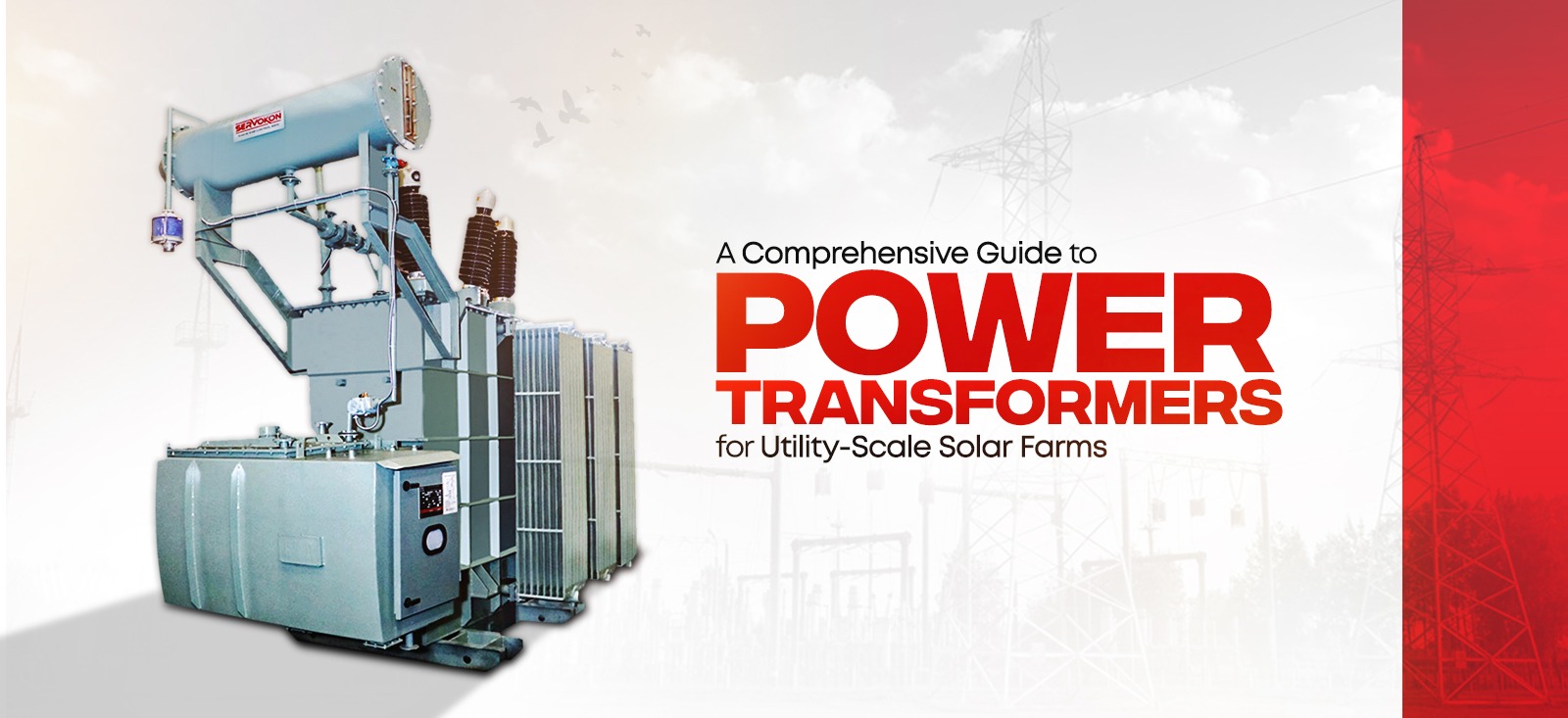
Global demands for replacing conventional energy sources with renewable power have given rise to solar power plants. These power plants have the capacity to produce and supply electricity on a large scale, which can be used by numerous households, industries, agricultural farms, commercial complexes, etc. Though there are fundamental differences between conventional power plants and solar farms, these work on similar models of transmission of electricity. Power transformers are one such component in the supply chain of solar energy from farms to end users. In this blog, we will learn about the necessary steps to select the power transformer for utility-scale solar farms.
Guide to Selecting a Power Transformer for Solar Farms
At utility-scale solar farms, electricity is produced in megawatts, which is sufficient for powering thousands of homes. Power transformers by manufacturers like Servokon are used for voltage transformation, stabilizing the grid and regulating the load. Here is the checklist of essential steps to follow when choosing the power transformer for solar farms:
1. System Voltage Capacity and Type
The voltage capacity of the selected transformer must be slightly higher than the total power produced by the solar farm. Choose a higher rating transformer because of the fluctuations and overloading. After matching the voltage, select the type of power transformer required. It can be oil-immersed, dry-type or pad-mounted.
2. Consider Future Expansion
As we know that electrical power demands keep rising, and the power plants are required to adapt to these demands. Though energy-efficient household appliances are being made, the overall energy consumption still increases. Considering this rise, the solar farms expand their capacity and therefore the power transformer should accommodate the anticipated future growth.
3. Assess The Technical Specifications
Based on the load capacity, environmental conditions and variations in supply, a technically robust power transformer must be chosen that matches the requirements of the solar farm. The technical specifications that need to be considered are vector group and impedance, harmonic performance and DC tolerance, surge protection and insulation, cooling type and temperature rise limits.
4. Look for Safety Features
Safety of the power transformer is as critical as its performance. Overvoltage, grid fluctuations, lightning strikes and fire are some of the big threats that can lead to severe losses. Look for protection against overvoltage, interference, and fire safety construction.
5. Choose The Right Manufacturer
Choose the power transformer manufacturer with a proven track record in the industry and accredited with the necessary certifications and approvals. They should be able to customize according to the specific needs of the project and provide post-installation maintenance services.
Conclusion
When selecting the power transformer for utility scale farms, it is important to match the voltage and power ratings with the capacity of the solar farm, assess safety features and evaluate the manufacturer. With a clear specification and a complete review of options, project owners can secure equipment that supports stable power generation from their solar farms for decades. We at Servokon are the masters at handling power transformer supply and installation, with incredible post installation services.