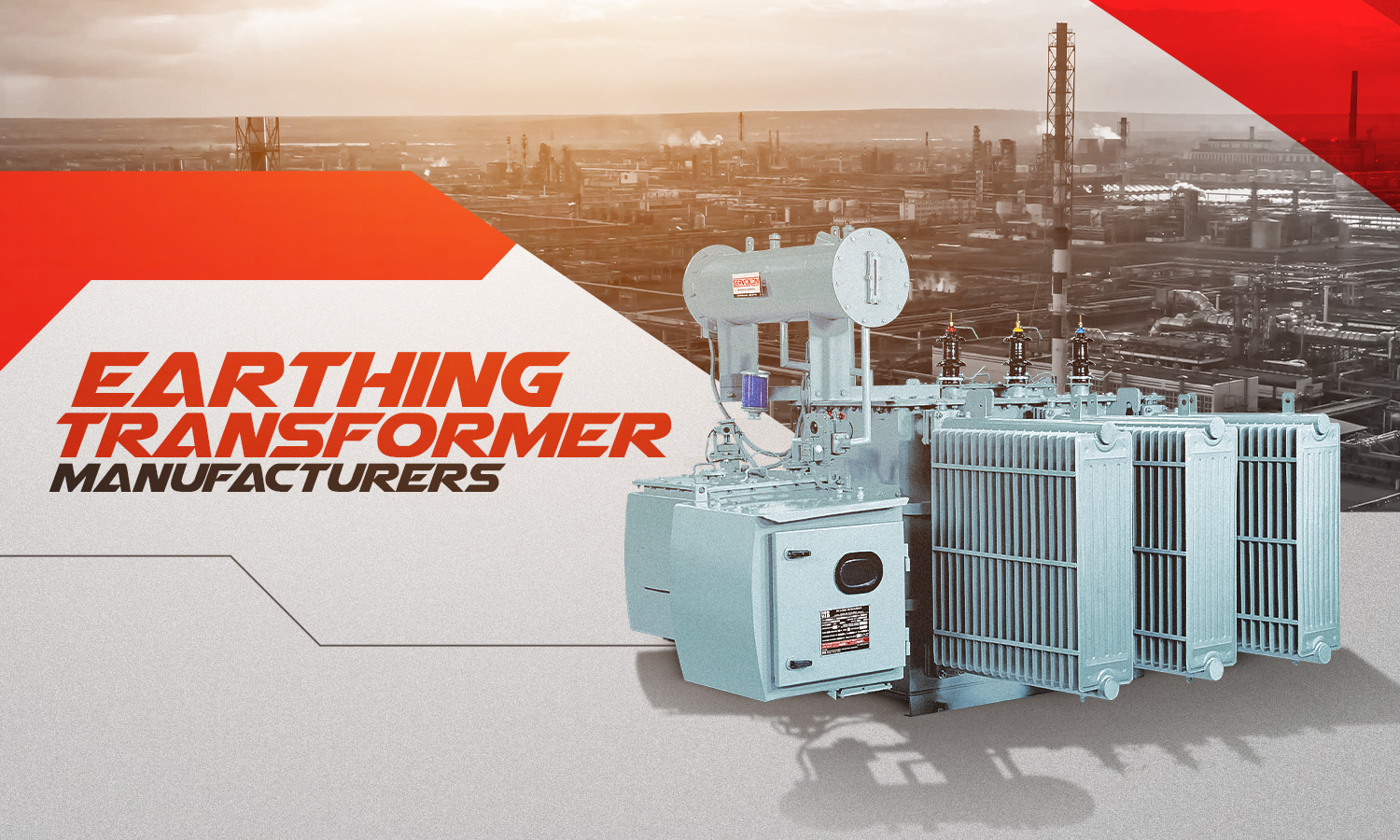
Grounding or earthing is an essential requirement of any power system. It provides a safe electrical path for the fault currents to follow. Without earthing, the systems face issues of overvoltage even with minor fault current. Grounding creates a zero-voltage reference point for the electrical systems to balance loads. However, not all electrical networks have grounding present in their systems, such as delta-connected networks where no neutral point exists. This is where earthing transformer manufacturers come into play. They design these transformers to handle real industrial conditions and improve overall system safety and performance.
Understanding Ungrounded Power Systems
Systems with delta-configurations, such as industrial motors and power transmission, have three phase electrical network with no neutral point. This is an ungrounded power system. Due to the absence of a grounding reference, the faults cannot be detected which leads to over voltages and equipment damage. There is a serious phase-to-phase short circuit when a double fault occurs. These issues are resolved by earthing transformer manufacturers. Their equipment introduces a neutral reference and enables controlled grounding.
Why Earthing Transformer is Used
An earthing transformer is a special type of transformer. It often works in conjunction with neutral grounding resistors or reactors for precise fault detection and control.
Creation of a Neutral Point
In the systems without a grounding or neutral point, this transformer creates an artificial grounding reference point. The system becomes more predictable as there is better management of faults and overvoltages.
Improved Fault Detection and Protection
The path provided by the earthing transformer has low impedance, which means the current has minimal resistance to flow. This allows the fault current to dissipate easily. Without this transformer, the fault current will flow in unintended routes, causing severe damage to equipment, fire accidents and affect safety of personnel working nearby.
Voltage Stabilization
Voltage fluctuations affect the insulation layers of the system the most, causing it to degrade much sooner. Not only does it require replacement, but it also compromises the function of the connected equipment. By balancing the fault currents, the earthing transformer stabilizes the voltage.
Reduction of Transient Overvoltages
Transient surges often occur during switching operations. These spikes lead to insulation failure. But the transformer suppresses these spikes and safeguards the system.
Applications in Real-World Systems
The earthing transformer minimizes the unexpected failures in the three phase system where there is no natural grounding point of reference. It real world applications are:
- Industrial plants
- Electrical substations
- Solar and wind power systems
- Medium voltage distribution networks
Conclusion
To summarize, the lack of a neutral point is a major risk to the safety and longevity of the large three-phase electrical networks. It caused insulation failure, short circuit and fatal accidents. To deal with such problems, the utility companies or industrial businesses rely on earthing transformer manufacturers. They build the exact safety equipment that improves safety, protects expensive machinery and power infrastructure, and ensures stable operation of the electrical system. Servokon is a leading provider of this type of transformer. We provide the ones that meet practical demands for our clients.