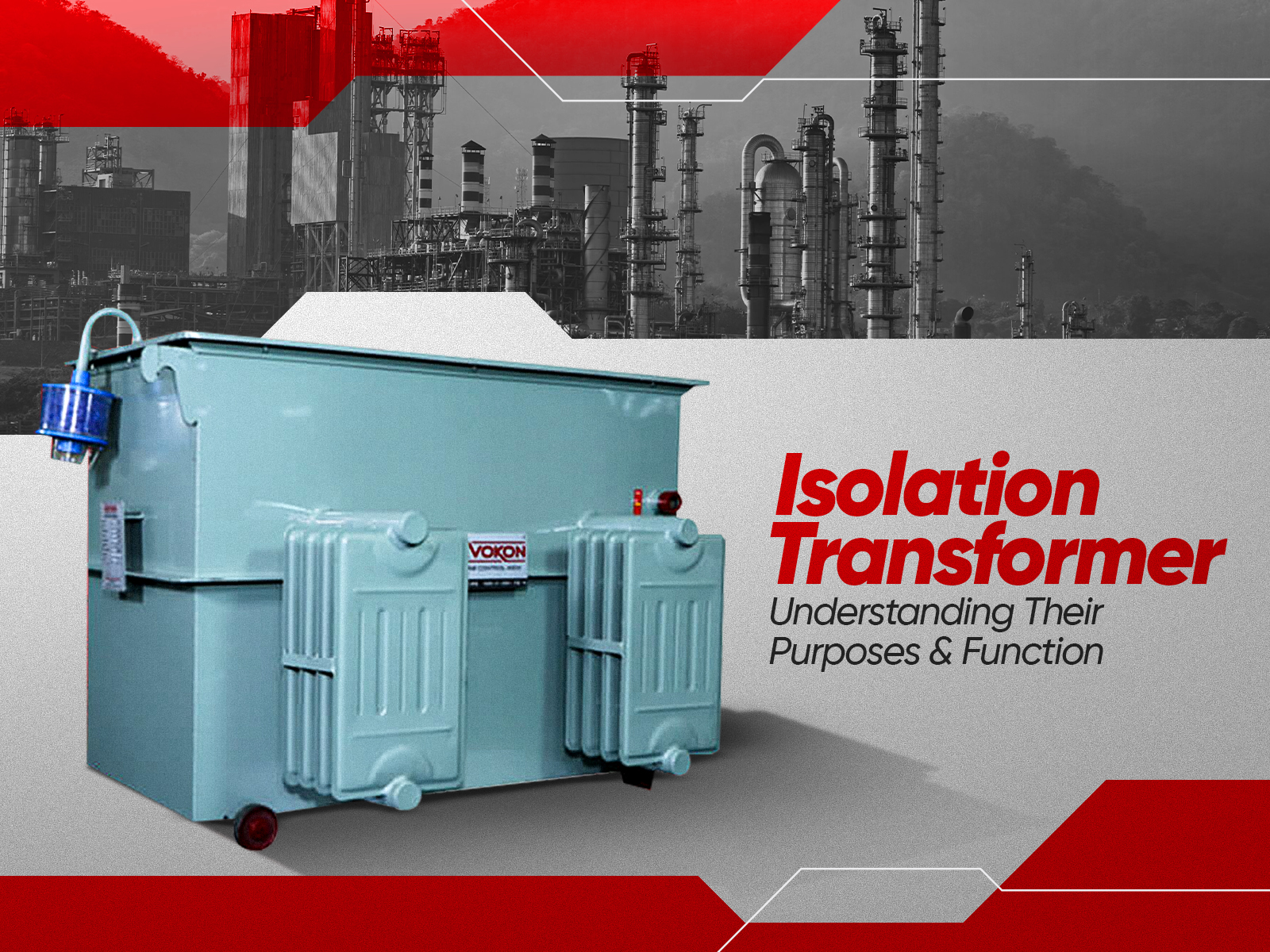
In most transformers, voltage adjustment is the main job. Power transformers are built to change voltage levels to appropriate values for distribution and transmission. However, isolation transformers are built for something else. The working of these transformers is very different from how a power or distribution transformer functions. Electric shocks, electrical noise in communication devices, and high frequencies from motors and VFDs are the common problems addressed by an isolation transformer.
Purpose of Isolation Transformer
The key purpose of an isolation transformer is to isolate the input power source from the load. This separation is important for several reasons. There could be a fault on the supply side. Even if there is no fault in the direct power source, contacting a live conductor that is fixed to Earth through the neutral conductor gives a dangerous shock to the personnel. Moreover, large equipment can inject electrical noise into the power lines, which can cause the sensitive equipment to malfunction.
Construction: An Important Aspect of Isolation Transformer
Construction of isolation transformers is what makes them different from conventional transformers. The primary and secondary windings share a common magnetic core but are electrically separated. The number of turns in the windings is the same, so the same voltage is transferred. What is not transferred is the current through the windings. Thus, any electrical contact between the load and power source is absent and power is transferred through electromagnetic induction.
What Is Galvanic Isolation
Galvanic isolation is when the two circuits are separated while allowing power to flow between them. By not allowing the flow of current, it eliminates the risk of fault current flowing, leakages and ground loops.
Various Functions
Here are the key functions of the isolation transformer:
Fixing Ground Loops
Isolation transformer separates the direct electrical connection between the source and load, thus eliminating the path for the undesirable currents. The result is better equipment performance and improvements in signal quality.
Creating Neutral Point
In many electrical installations, the output of an isolation transformer is grounded on purpose to create a new neutral point, thus creating an independently derived electrical system with its own neutral-to-ground connection. This contributes to the proper functioning of protective devices, including circuit breakers and residual current devices.
Blocking Electrical Noise
Isolation transformer minimizes transfer of common-mode electrical noise from supply to load. With the use of an electrostatic shield, its effectiveness at blocking interference from reaching the equipment is increased.
Conclusion
Isolation transformers are a key part of electrical systems, especially where safety, power quality, and reliability are primary concerns. Unlike standard transformers that serve only to change voltage, isolation transformers ensure total electrical separation between the supply and the load. It minimizes the chances of electric shock, reduces electrical noise, solves ground loop problems, and protects delicate devices against disturbances in power. As industries are becoming increasingly reliant on automation, medical equipment, communication systems, and precision devices, the need for effective isolation transformers continues to rise. At Servokon, we produce high-quality isolation transformers that guarantee a high level of electrical insulation, dependable functioning, and long operating life.